The award for the most comically dissonant image goes to:
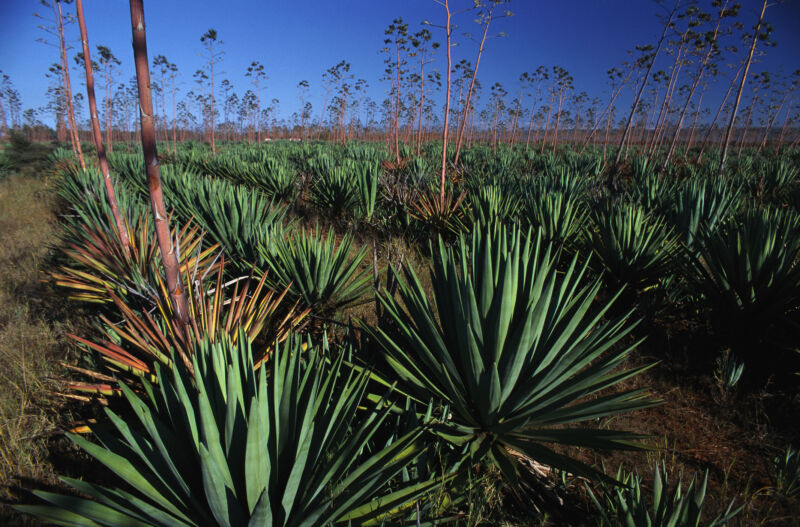
…visual juxtaposition aside. This is really promising.
Sisal is an invasive plant in rural Kenya, where it is often planted as livestock fencing and feedstock. It doesn’t require fertilizer, and its leaves can be harvested all year long over a five- to seven-year span. Odundo and his partners in Manu Prakash’s lab at Stanford University developed a process to generate soft, absorbent material from the sisal leaves. It relies on treatment with dilute peroxyformic acid (1 percent) to increase its porosity, followed by washing in sodium hydroxide (4 percent) and then spinning in a tabletop blender to enhance porosity and make it softer.
They tested their fibers with a mixture of water mixed with glycerol—to make it thicker, like blood—and found that it is as absorbent as the cotton used in commercially available maxi pads. It was also as absorbent as wood pulp and more absorbent than fibers prepared from other biomaterials, including hemp and flax. Moreover, their process is less energy-intensive than conventional processing procedures, which are typically performed at higher temperatures and pressures.
https://arstechnica.com/science/2023/12/a-locally-grown-solution-for-period-poverty/
 Dave5
Dave5 
Leave a comment